Lucas Paraizo
Designer at SmartStream
Sporty app
A mobile app concept for finding teammates and organising casual sports games
Introduction
Sporty is a mobile app concept designed during a General Assembly UX bootcamp. The goal was to help people find teammates and organise casual sports games beyond their existing social circles. The project focused on building a clear MVP, validating a real behavioural problem, and iterating the core journey through usability testing.
Context
During the pandemic, physical and mental wellbeing became a priority for many people. Team sports offer both physical activity and social connection, but organising games often breaks down once schedules change and friend groups become unreliable.
Many people want to play, but struggle to find enough available players who are nearby and interested at the same time. Existing platforms largely focus on venue booking or closed groups, which leaves a gap for people looking to join or create public games in a UK context.

Problem
People who want to play team sports struggle to consistently find others to play with.
The issue is not lack of motivation, but logistics. These factors often cause people to give up before a game happens.
- Clashing schedules
- Fragmented coordination across messaging apps
- Uncertainty around attendance
This leads to drop-off: people intend to play, but the effort required becomes the blocker.
Research and Discovery
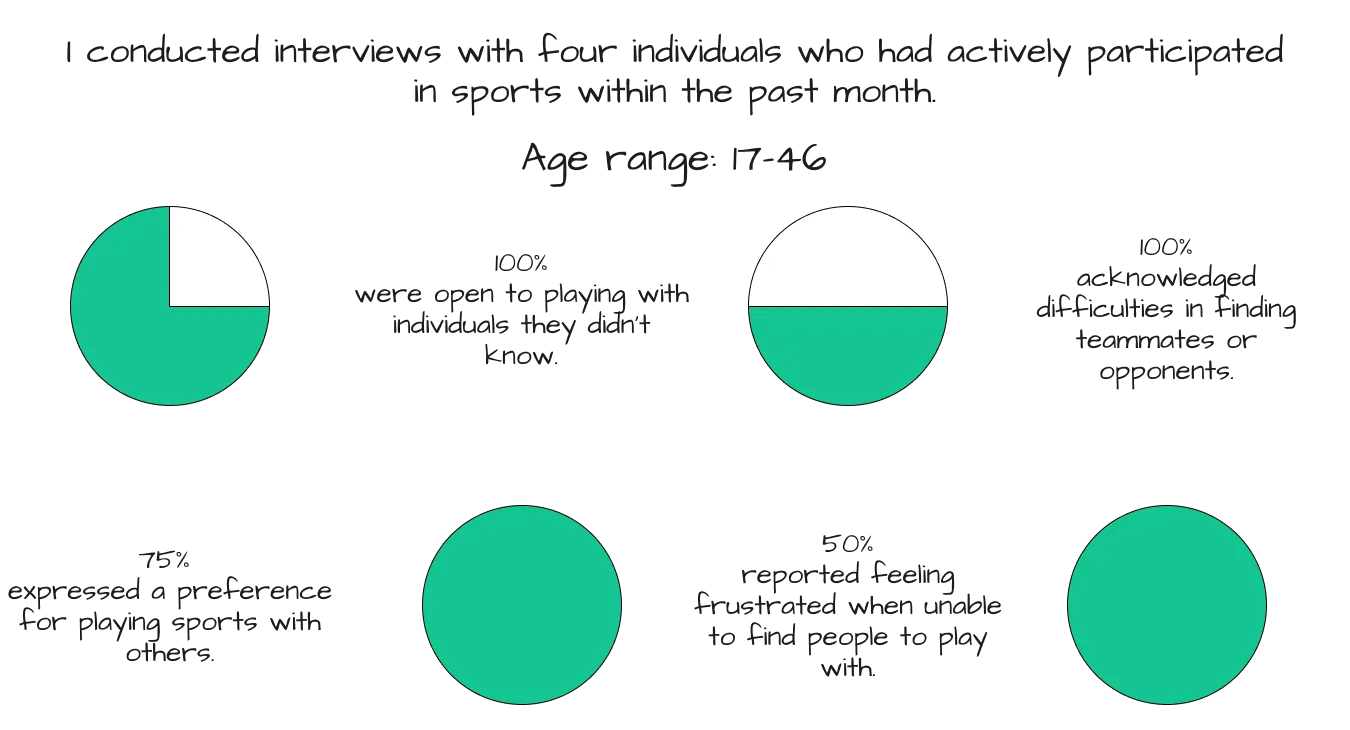
To validate whether this was a real and repeatable problem, I interviewed four people who regularly played sports.
The research revealed clear patterns.
- Most participants preferred team sports
- Everyone was open to playing with strangers
- Finding enough players was consistently described as difficult
- Half of participants explicitly mentioned frustration when others were unavailable, confirming that the problem was about coordination rather than interest.
These insights established the core focus of the project: reduce uncertainty and effort at the moment someone decides they want to play.
Key Design Challenge
The challenge was not designing a sports community in the abstract. It was removing friction from a very practical moment.
- How do users quickly find games that fit their schedule and location?
- How do they create or join a match without overthinking it?
- How do you make joining feel confident rather than awkward?
In consumer products, small moments of hesitation kill momentum, so clarity and speed became the primary design goals.
Design Strategy
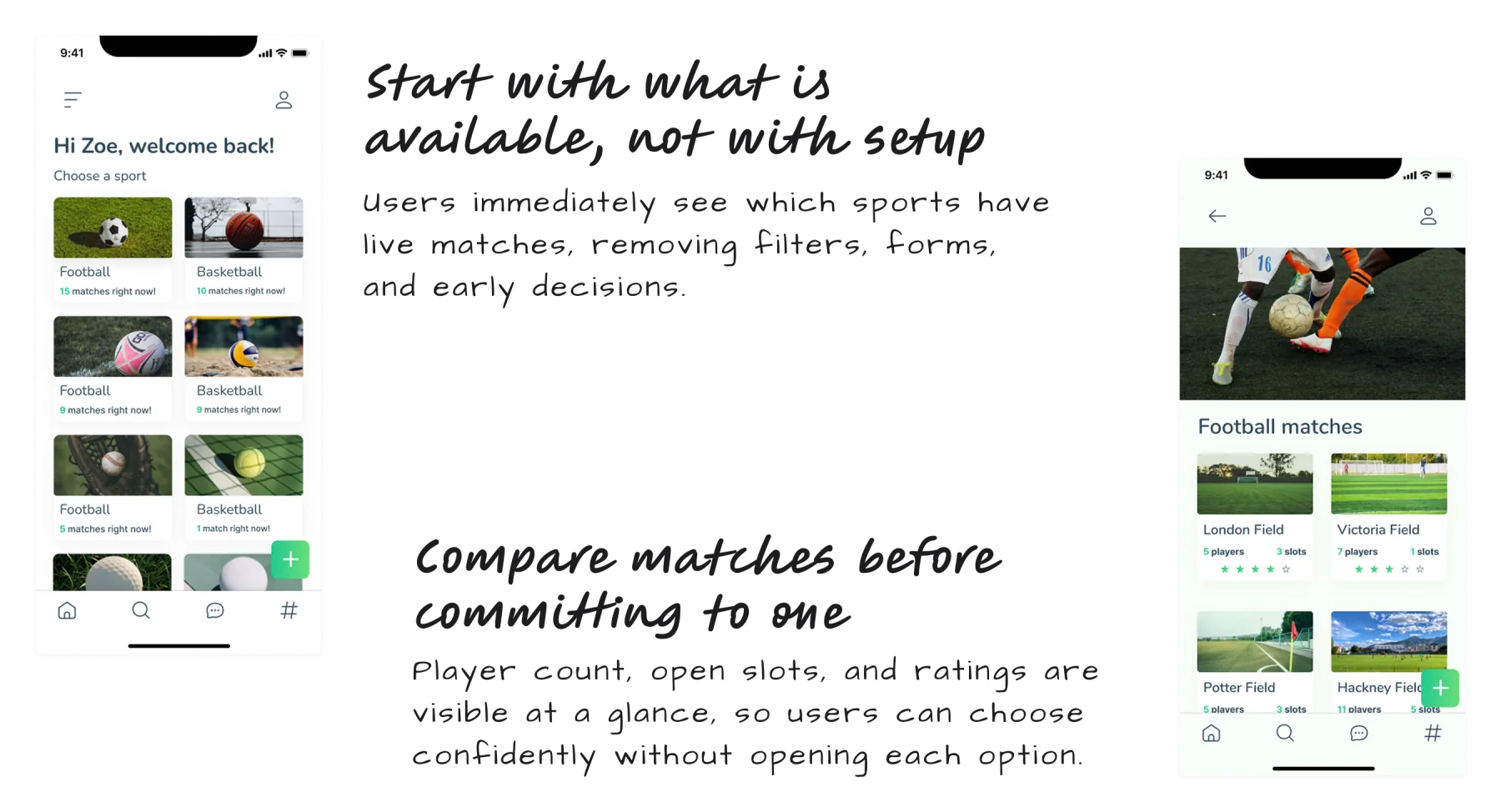
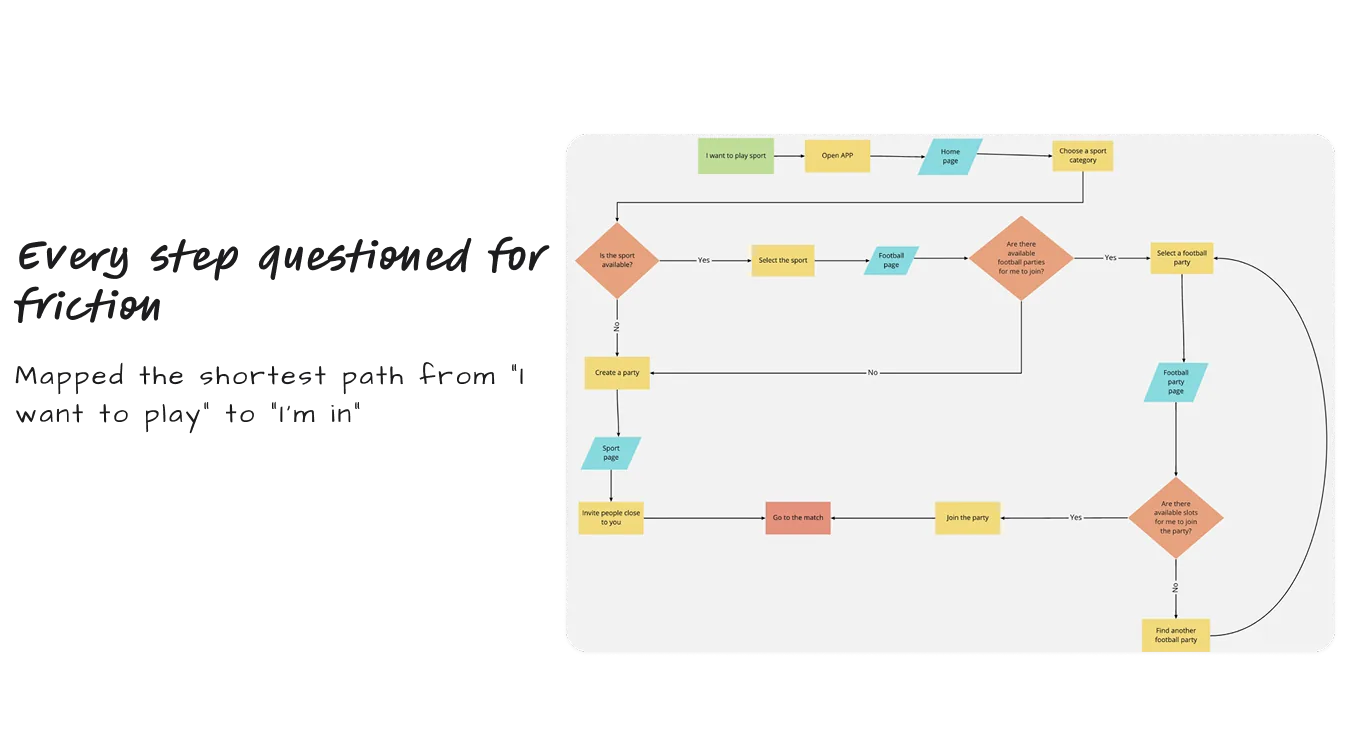
The product direction prioritised action over social complexity. Instead of building features like profiles, rankings, or chat early on, the design focused on three core behaviours:
- Selecting a sport
- Creating a public match
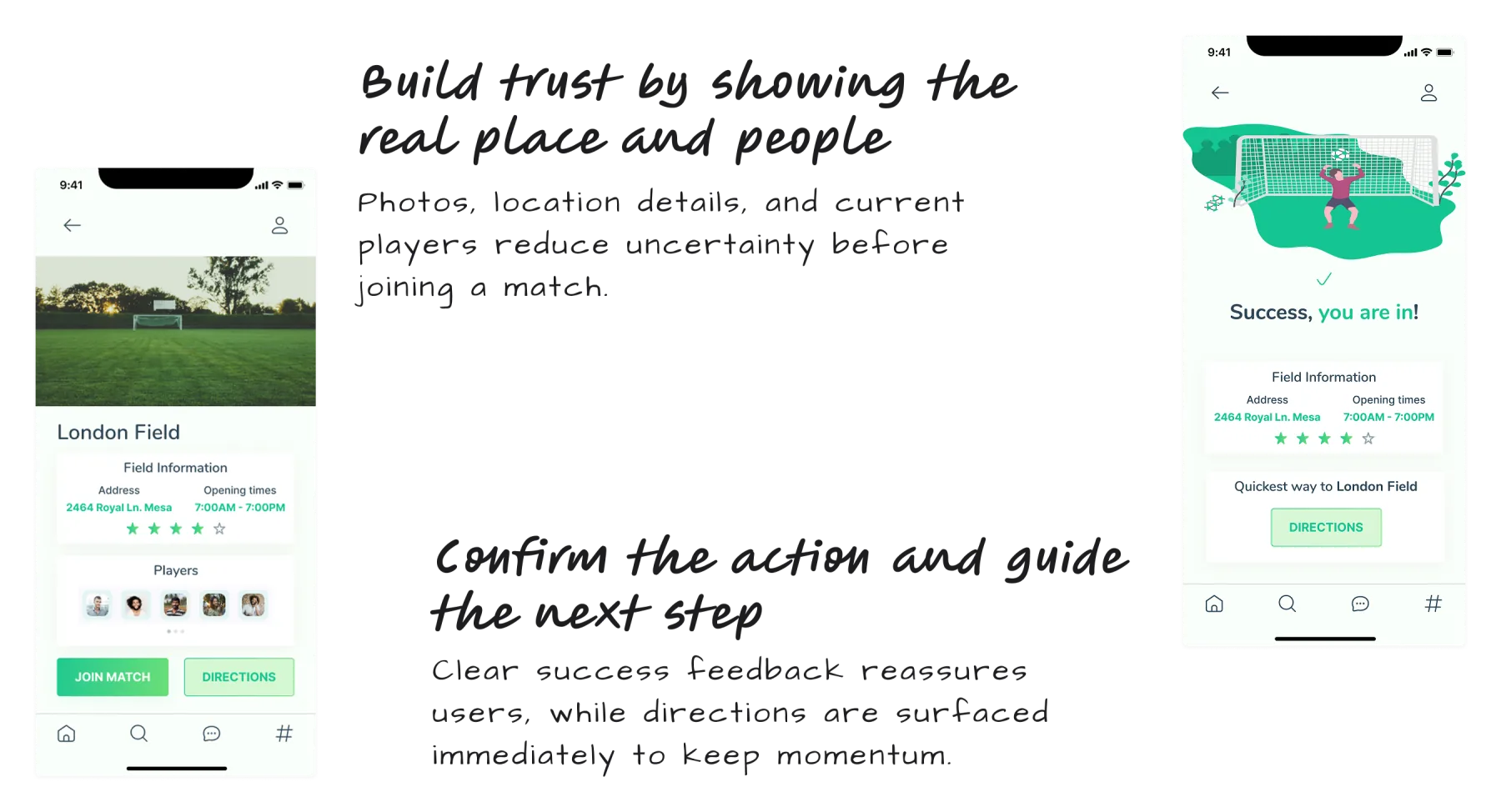
- Joining nearby games
This approach reflected real behaviour. The experience was designed to get users to a real-world match as quickly as possible.
MVP Definition
To keep scope realistic, a lean MVP was defined around match creation, discovery, and joining.
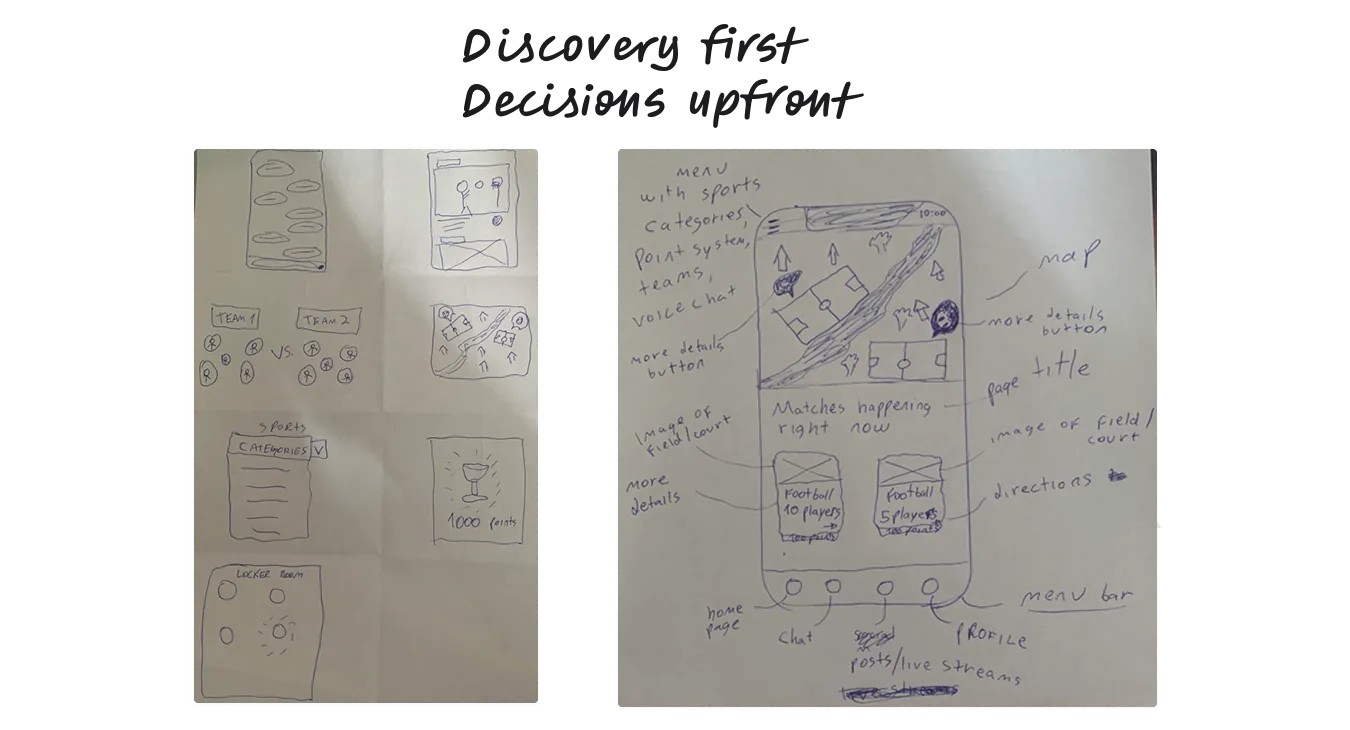
Early sketches and wireframes were used to establish structure, hierarchy, and navigation logic. These artefacts helped clarify the core journey before moving into a first high-fidelity version of the product, where layout, content density, and primary actions were fully explored.
- Match creation
- Discovery
- Joining
The goal at this stage was alignment, not validation. The experience needed to feel complete enough to test realistically.
Usability Testing and Iteration
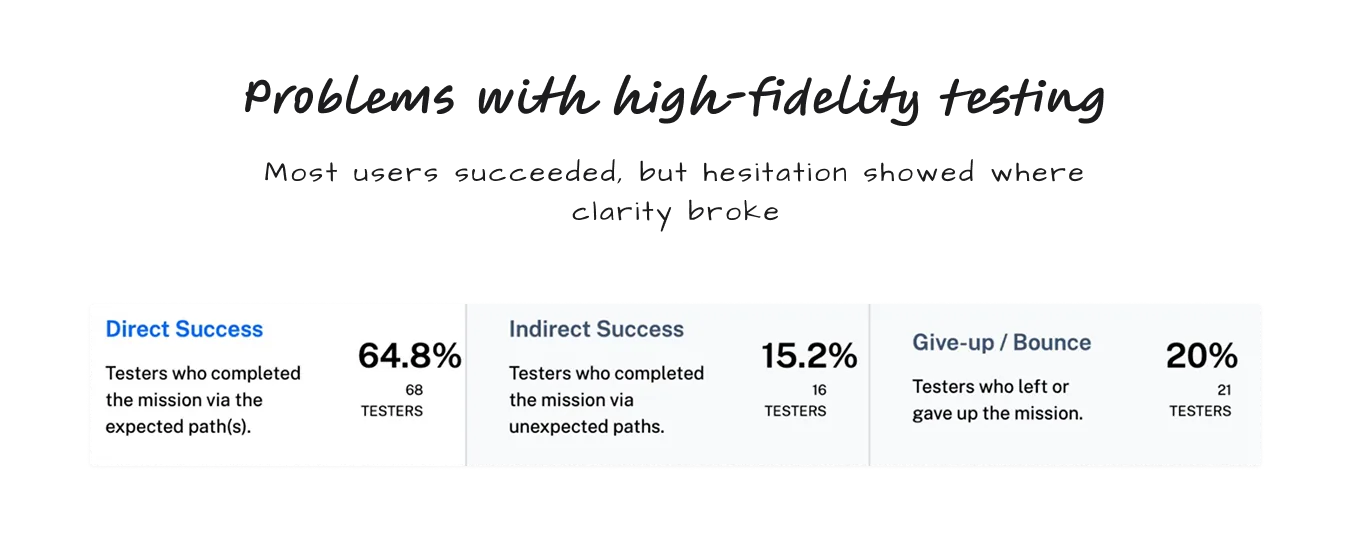
Usability testing was conducted on the first high-fidelity version of the design, focusing on a key task: joining a football match from entry to confirmation.
Testing showed that most users completed the task successfully, while others experienced hesitation or took indirect paths. This surfaced usability issues that were not obvious earlier, including:
- Unclear terminology
- Misaligned primary actions
- Content hidden by scrolling behaviour
Based on these findings, changes were made to reduce friction and decision fatigue:
- Terminology was refined
- Button placement was improved
- Layout adjustments were made
The iterations focused on improving clarity and flow rather than expanding scope.
Final Prototype
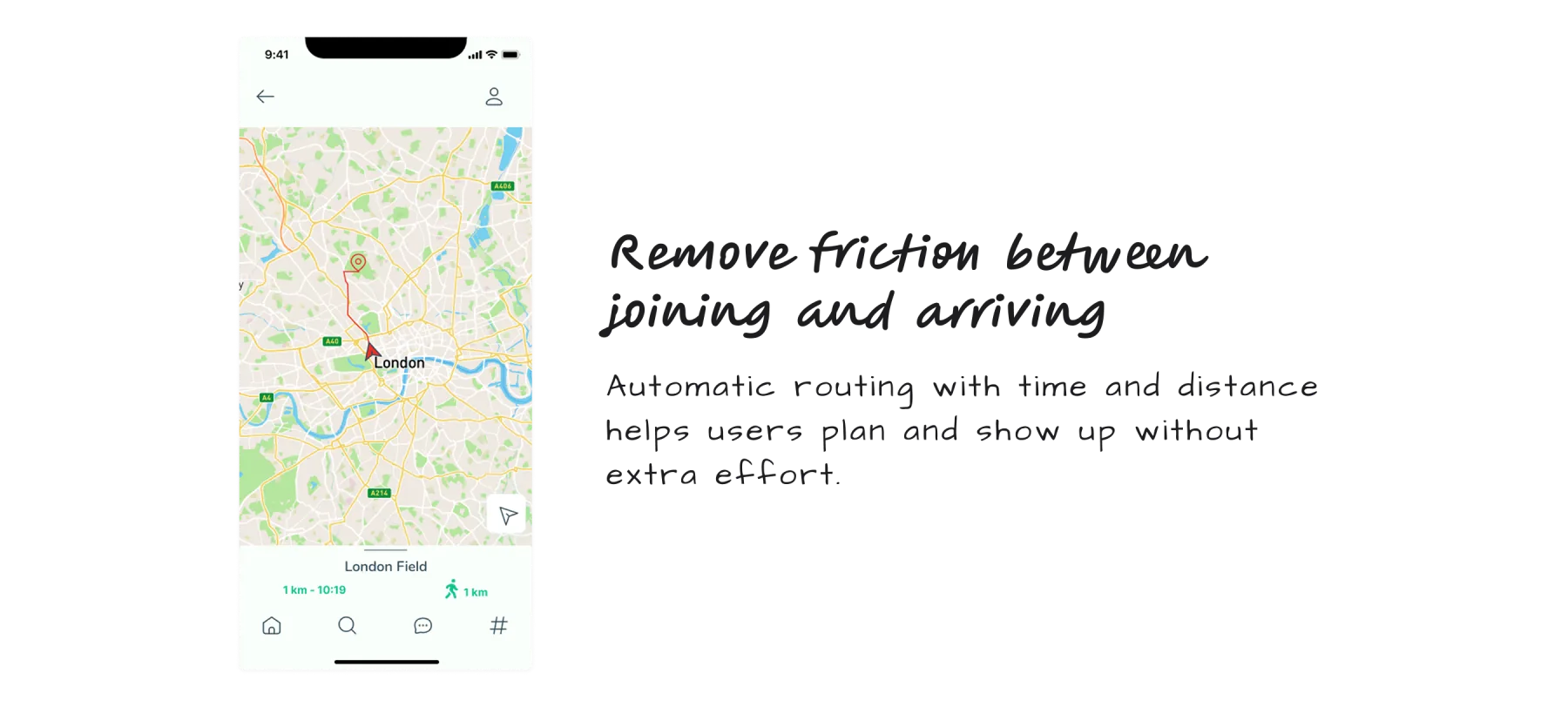
The final prototype enables users to quickly find or create public sports games based on location and availability.
- Supports fast decision-making
- Lowers the barrier to playing with new people
The result is a focused sports app concept that prioritises real-world action over feature depth, while leaving space for future growth through social or competitive layers without overloading the MVP.